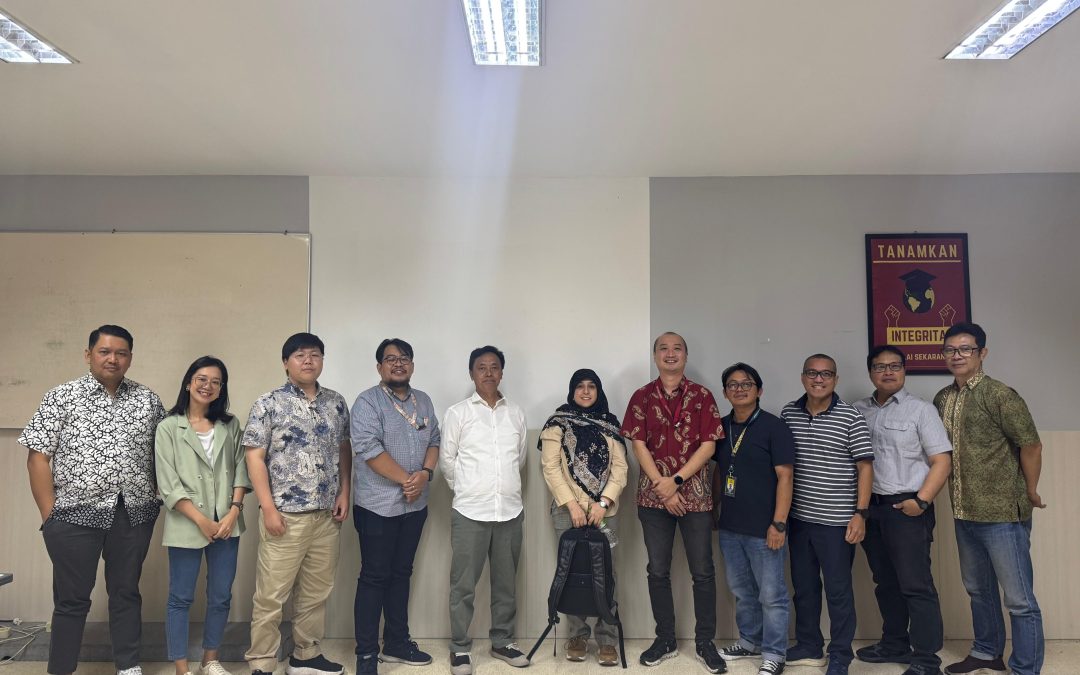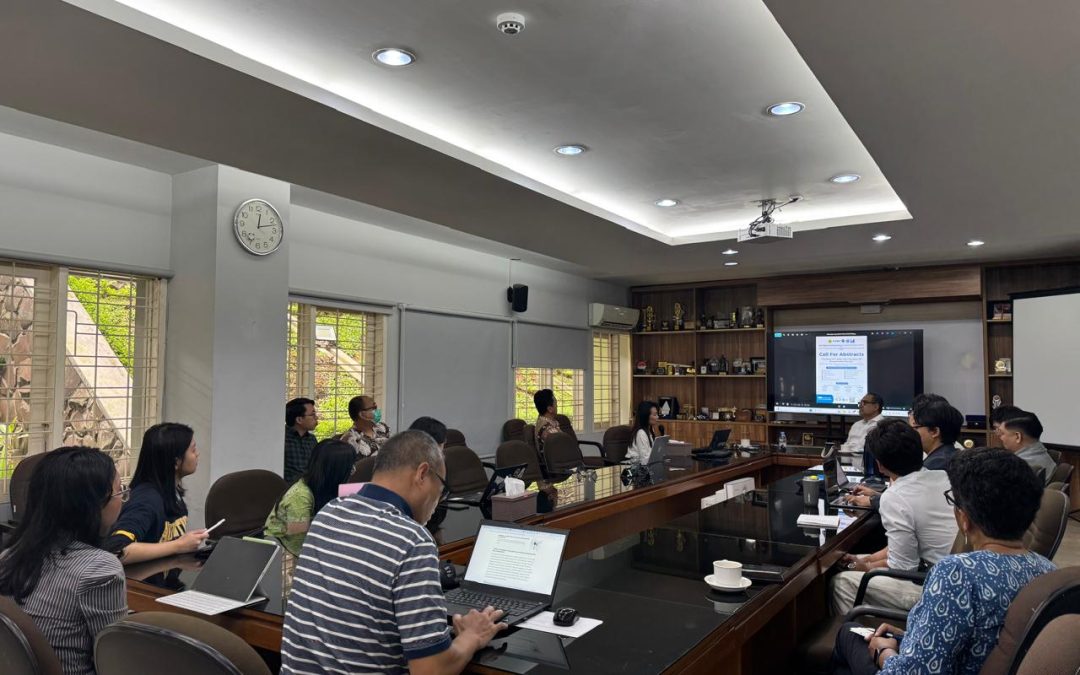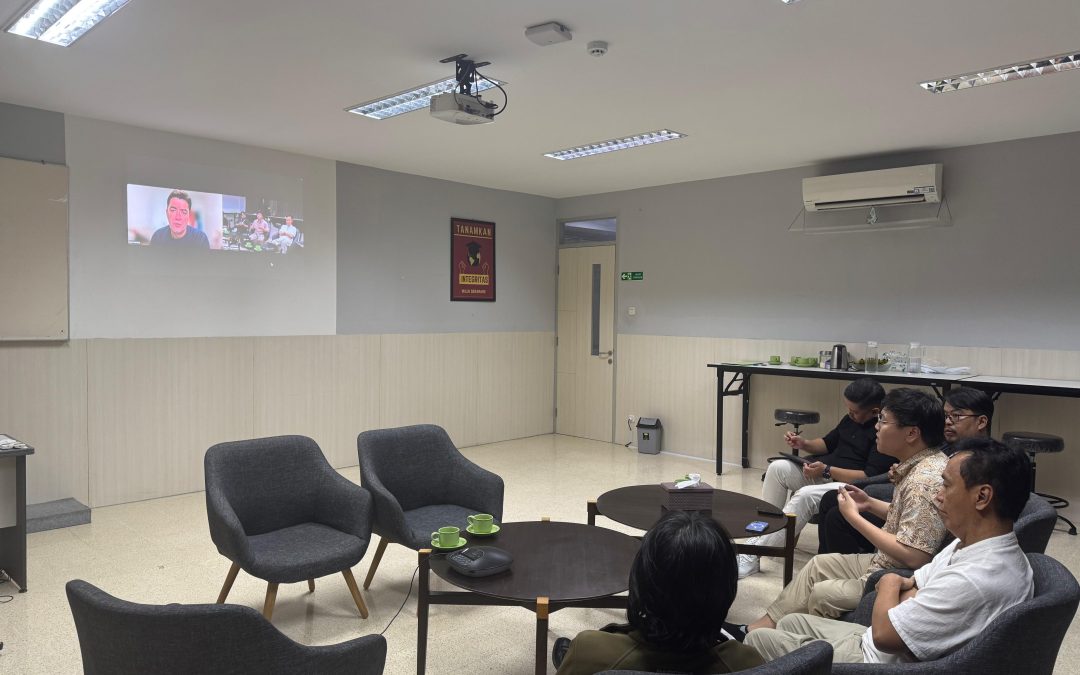


Bandung, January 12, 2026 — The Parahyangan Center for International Studies (PACIS) of Parahyangan Catholic University responded to an academic visit from the Center for International Relations Studies (CIReS), Faculty of Social and Political Sciences, University of Indonesia, for a research fieldwork activity entitled “Shifting Tides, Managing Turbulences: Setting the Agenda for Fostering Regional Security Cooperation .” This activity is also part of ongoing research on the changing dynamics of security in the Indo-Pacific region.
The research being conducted by CIReS UI focuses on Indonesia’s perceptions and assessments of Japanese security policy developments, particularly following the adoption of Japan’s 2022 National Security Strategy (NSS), and its implications for strengthening regional security cooperation within the ASEAN and Indo-Pacific frameworks. The CIReS UI research team present at the visit included Broto Wardoyo as the Research Team Leader, Nida Rubini as a Researcher, and Kristina Sirait as a Research Assistant.
The PACIS researchers who attended included Yulius P Hermawan, Albert Triwibowo, Albertus Irawan, Adrianus Harsawaskita, Idil Syawfi, Ignasius Loyola, Kishino Bawono, Ratih Indraswari, and Rizky Widian.
PACIS researchers interpret Japan’s adoption of the 2022 National Security Strategy (NSS) as a reflection of Japan’s efforts to adapt to the increasingly complex Indo-Pacific security landscape. Rising great power rivalry, escalating maritime tensions, and the vulnerability of global supply chains are key contexts shaping the direction of this policy. However, this change should not be understood as a fundamental shift in Japan’s character, as its defensive orientation and constitutional pacifism remain the foundations of its security policy.
The discussion then focused on increasing Japan’s defense budget to nearly 2 percent of Gross Domestic Product. This move was positioned as part of the burden-sharing dynamics within the United States-Japan alliance, as well as a response to increased security activity in the region, from the South China Sea to the Taiwan Strait and Northeast Asia. From the perspective of Indonesia and Southeast Asia, this development opens up opportunities for cooperation, but also presents challenges that must be carefully managed to avoid impacting regional stability.
Maritime security and supply chain protection have emerged as a point of convergence of interests between Indonesia, Japan, and ASEAN countries. However, cooperation in this area needs to be designed inclusively and sensitively to regional dynamics, to avoid creating an impression of exclusivity or arousing suspicion among other actors, particularly China. In this context, an approach emphasizing confidence-building measures, strengthening non-combat capacities, and Humanitarian Assistance and Disaster Relief (HADR) cooperation is considered more realistic and politically acceptable.
The discussion also touched on various established cooperation frameworks, such as the Free and Open Indo-Pacific (FOIP), Official Development Assistance (ODA), Official Security Assistance (OSA), and the principle of ASEAN centrality. Within this framework, Indonesia is seen as strategically positioned as a middle-income country capable of bridging the interests of various parties, while ensuring that every Indonesia-Japan cooperation initiative remains in line with the mechanisms and principles of ASEAN centrality, including in the process of formulating a Code of Conduct in the South China Sea.
Overall, Japan’s security policy changes are understood as a form of strategic adaptation to regional and global dynamics. Therefore, researchers agree that a more systematic mapping of Indonesian elite perceptions of Japanese security policy is a crucial prerequisite for formulating a realistic, inclusive, and sustainable cooperation agenda.
Through this academic dialogue, PACIS UNPAR views the visit by CIReS UI as an important discussion forum for sharing perspectives and deepening cross-institutional understanding. The exchange of views is expected to provide not only academic contributions but also relevant policy recommendations for Indonesia in responding to changing regional security dynamics and leveraging opportunities for cooperation with Japan.
Author : Nazwa
Documentation: