
Author: Cialdella Honorine*
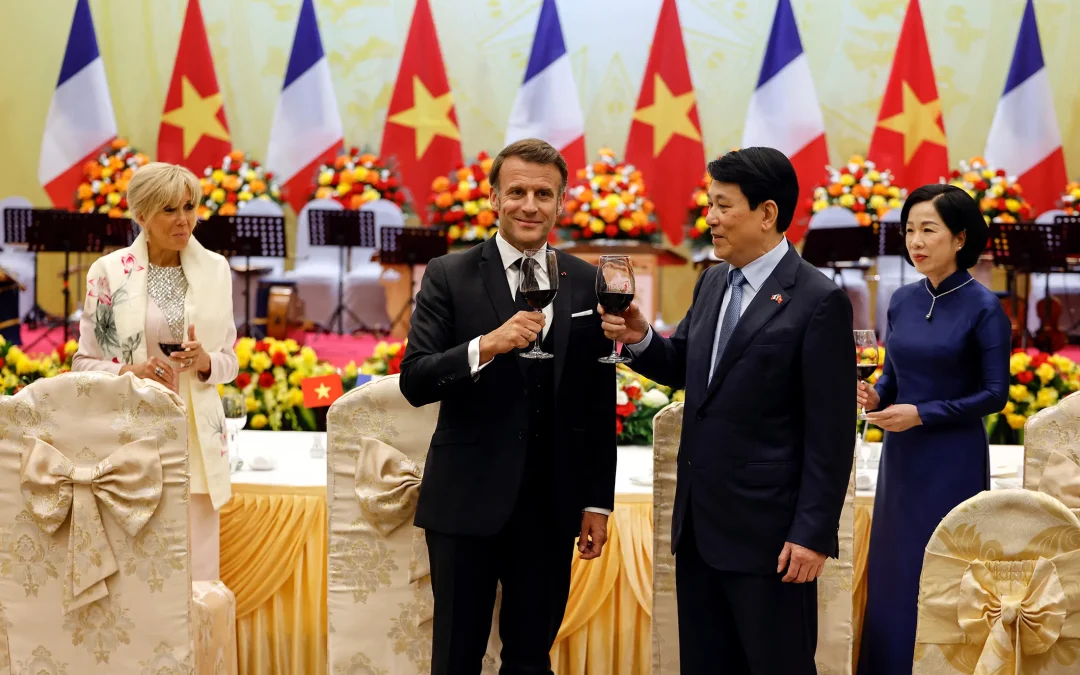
In May 2025, French President Emmanuel Macron spoke at the Shangri-La Dialogue (defense meeting) in Singapore to deliver a clear message: France is not a visitor in the Indo-Pacific; it’s a “resident Power” by highlighting that 1.6 million French citizens and 8,000 military personnel in the region legitimize France as a local actor in security in Southeast Asia (Vie Publique, 2025). It was a response to the 2021 ANKUS crisis, a geopolitical betrayal in which Australia cancelled a multi-billion-dollar submarine contract with France in favor of a secret pact with the United States and the United Kingdom (BBC News, 2021). This major event marks the beginning of a strategic pivot by France toward Southeast Asia to reclaim its power and prove it can lead a “Third Path” (Pacific Forum, 2024) between Washington and Beijing. This engagement is demonstrated through economic engagement on issues such as the green energy transition and infrastructure in ASEAN countries. However, those investments and interests invite us to question France’s engagement in the region as a sincere commitment toward development.
In this essay, I will demonstrate how France’s realities of engagement constitute a rebranding of its image and a national interest, first by examining the “tangible” cooperation and then its reality.
Firstly, to understand cooperation and how it can be perceived as genuine, we can observe France’s commitment to helping Southeast Asian nations modernize.
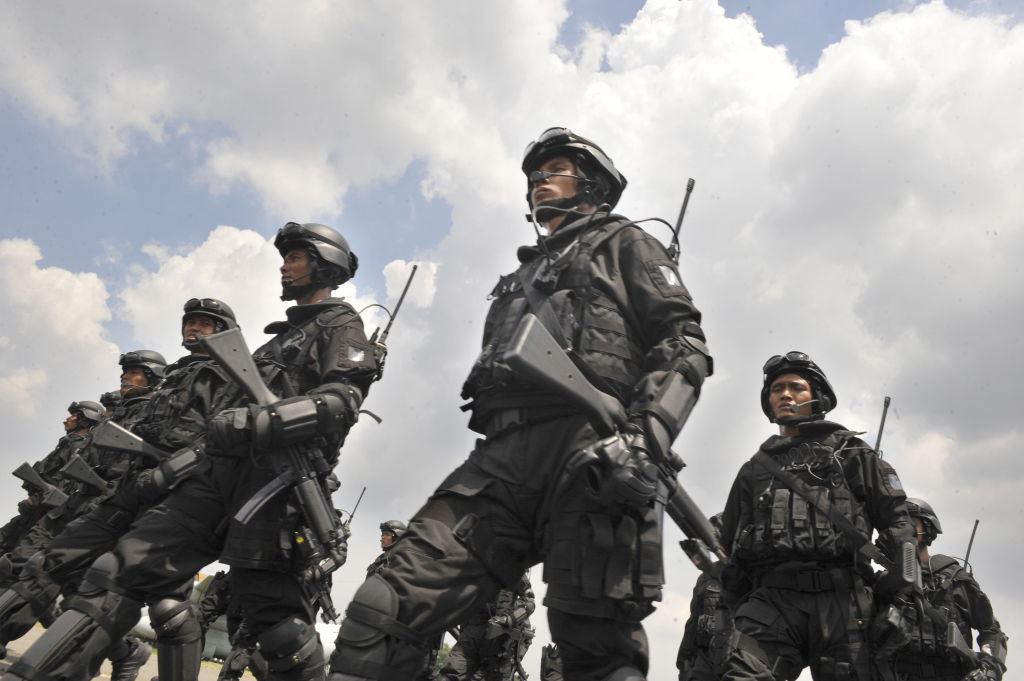
A major tool seen as an opportunity for Indonesia’s autonomy is the 2024 Indonesia-France Defense Agreement. In my opinion, this agreement arrived at a good time for Indonesia, as it seeks to follow a path of development and autonomy. This deal included the sale of submarines and fighter jets, but it was not just a commercial transaction; it was a real technology transfer (Lowy Institute). Indeed, France transmitted industrial knowledge, trainings to allow Indonesia to build and maintain high-tech assets locally, showing the commitment of France to a long-term strategic independence of its partner rather than the traditional model, the “customers-only” (meaning France would have just sold the technologies, not built them in Indonesia, and proceed to a technology transfer) provided by major powers. Still, we assist in a “sovereignty Partnership”.
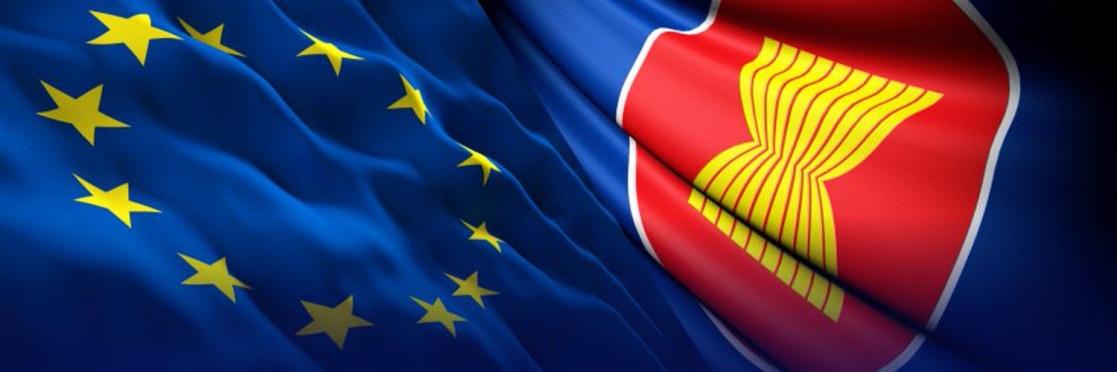
Furthermore, I think the “genuine” cooperation is evident in the environmental sphere, where France positions itself as a leader in the energy transition. Through the Agence Française de Développement (AFD), France is investing in long-term projects, not just “vanity” projects. Since 2022, the AFD has raised over 2.5 billion euros to invest in infrastructure to decarbonize ASEAN power and protect biodiversity in Vietnam and Indonesia. France aligns its financial power with ASEAN’s development goals; it acts as a stakeholder in the region’s future, not just a distant investor. With those, I think France is fostering a sense of proximity and genuine consideration toward ASEAN countries.
While Paris paints its engagement as a “Third Path”, many would argue, including me, that France’s strategy is a rebranding of its global image.
Talking again about the 2021 ANKUS crisis helps us highlight how France is using Southeast Asia for rebranding. After this betrayal by Australia, France is seeking other alliances, such as with Indonesia, while adopting a discourse of not abandoning its partners, in contrast to the US and Australia. It portrays itself as a long-term partner,r as said before, but for me it reflects a redistribution of power in the region where France lost importance and tries to become a major actor with new allies to reflect power in this region again, using countries such as Vietnam and Indonesia (Pacific Forum, 2024). In my opinion, this crisis is one of the key points for understanding how France is using “tragic” events to build new positive partnerships and to use them as a diplomatic marketing tool to hide the fact that it has lost power. They want to regain power, and for that, they prioritize their own interests over genuine cooperation to help Southeast Asian countries.
Furthermore, how can France become a credible partner rather than an imperial power over Southeast Asia, given its historical role? Indeed, given its history with Vietnam, for example, France must be careful not to overstep in the region, as independence for these countries became a major aspect of their sovereignty, making internal cooperation complicated. So how can France step in, too? Even though it proclaims itself a “resident power” due to the presence of 1.6 million French citizens in the region, it is still seen by local actors as an external European actor, casting doubt on the term “resident”. Indeed, it’s a geopolitical reality, but in my opinion, it’s more a diplomatic construction by France to gain legitimacy in the region.
As stipulated in the introduction, President Emmanuel Macron states that France is a permanent actor and a major one in security. But actions demonstrate more than words. In the context of the South China Sea conflict in 2025, France announced the deployment of the Charles de Gaulle carrier strike group as a signal of its commitment to the region. Yes, this action is symbolically powerful, but there is a gap between its capabilities and its actual capacity due to having only one aircraft carrier, and its deployment is geographically complicated. In contrast, the US and Chinese forces have a permanent presence in the region, making France’s carrier deployment more a demonstration of political intent than a decisive shift in the regional balance of power, and making French military actions more performative, increasing their image as a security provider rather than shaping security outcomes. In my opinion, even though France can be seen as a “resident power” in practice, it cannot proclaim this due to a lack of capabilities and actions focused on rebranding, a pure goal of being well perceived rather than helping the region with concrete actions.
To conclude, France’s engagement in Southeast Asia cannot be seen as genuine cooperation but rather as a diplomatic rebranding. Indeed, Paris uses the ANKUS crisis to turn toward a new strategy as a “resident power” to restore its international position. But it also aligns with ASEAN’s wish to seek new partnerships. France’s promotion of a “third Path” aligns with ASEAN’s preference for strategic autonomy. We see in this essay that France’s influence relies on Soft power rather than military due to a lack of capabilities. In my opinion, a shift of power dynamics is visible on the global stage, and France needs Southeast Asia to remain relevant, and of course, Southeast Asia also needs France. Indeed, even though France is using this region for its own purposes, Southeast Asia also needs France to balance larger powers, with cooperation alongside national interests.
International Relations students in the Southeast Asia class under the guidance of Ratih Indraswari.s, but it was not just a commercial transaction but a real technology transfer (Lowy Institute). Indeed, France transmitted industrial knowledge, trainings to allow Indonesia to build and maintain high-tech assets locally showing the commitment of France to a long-term strategic independence of its partner rather than the traditional model, the “customers-only” (meaning France would have just sell the technologies not built them in Indonesia and proceed to a technology transfer) provided by major powers but we assist to a “sovereignty Partnership”.
Furthermore, I think the “genuine” cooperation is visible in the environmental aspect, where France positions itself as a leader of energy transition. Through theAgence Française de Développement (AFD), France is investing in long-term projects, not just “vanity” ones. Since 2022, the AFD has raised over 2.5 billion euros to invest in infrastructure to decarbonize ASEAN power and protect biodiversity in Vietnam and Indonesia. France aligns its financial power with ASEAN development goals; it acts as a stakeholder of the region’s future and not just a distant investor. With those, I think France is creating a feeling of proximity and real consideration toward ASEAN countries.
While Paris paints its engagement as a “Third Path”, many would argue, including me, that France’s strategy is a rebranding of its global image.
Talking again about the 2021 ANKUS crisis helps us highlight how France is using Southeast Asia for rebranding. After this betrayal by Australia, France is seeking other alliances, such as Indonesia, by adopting a discourse of not abandoning its partners in contrast to the US and Australia. It portrays itself as a long-term partner,r as said before, but for me it reflects a redistribution of power in the region where France lost importance and tries to become a major actor with new allies to reflect power in this region again, using countries such as Vietnam and Indonesia (Pacific Forum, 2024). In my opinion, this crisis is one of the key points to understand how France is using “tragic” events to find other positive partnerships and use it as a diplomatic marketing tool to hide the fact it lost power. They want to become powerful again, and for that they think first of their interest rather than a genuine cooperation to help southeast asian countries.
Furthermore, how can France become a credible actor of partnership rather than a form of imperial power over Southeast Asia due to historical events? Indeed, with its history with Vietnam, for example, France must be careful not to overstep in the region, as independence of these countries became a major aspect of their sovereignty, making internal cooperation complicated, so how can France step in too? Even though it proclaims itself as a “resident power” due to the presence of 1.6 million French citizens in the region, it is still seen by local actors as an external European actor, putting in question the term “resident”. Indeed its a geopolitical reality, but in my opinion its more a diplomatic construction made by France to gain legitimacy in the region.
As stipulated in the introduction, President Emmanuel Macron states that France is a permanent actor and a major one in security. But actions demonstrate more than words. In the context of the South China Sea conflict in 2025, France made a statement to deploy the Charles de Gaulle carrier strike group as a signal to its commitment to the region. Yes, this action is symbolically powerful, but there is a gap between its action and real capabilities due to having only one aircraft carrier, and for deployment geographically its complicated. In contrast, there are the US and Chinese forces that have a permanent presence in the region, making the deployment of France’s carrier more a demonstration of political intent rather than a decisive shift in the regional balance of power. Making military actions of France more performative, increase their image as a security provider rather than shaping security outcomes. In my opinion, even though France can be seen as a “resident power” in the facts, it cannot proclaim this due to a lack of capabilities and actions turned toward a rebranding, a pure goal of being well perceived rather than helping in the region by concrete actions.
To conclude, France’s engagement in Southeast Asia cannot be seen as a pure and genuine cooperation but rather a diplomatic rebranding. Indeed, Paris uses the ANKUS crisis to turn toward a new strategy as a “resident power” to restore its international position. But it also aligns with ASEAN’s wish to seek new partnerships. France’s promotion of a “third Path” aligns with ASEAN’s preference for strategic autonomy. We see in this essay that France’s influence relies on Soft power rather than military due to a lack of capabilities. In my opinion, a shift of power dynamics is visible on the global stage, and France needs Southeast Asia to remain relevant, and of course, Southeast Asia also needs France. Indeed, I think even though France is using this region for personal goals, Southeast Asia also needs France to balance larger powers, with the coexistence of cooperation and national interests.
*Students Exchange in International Relations in Southeast Asia class; Professor: Ratih Indraswari, Ph.D.