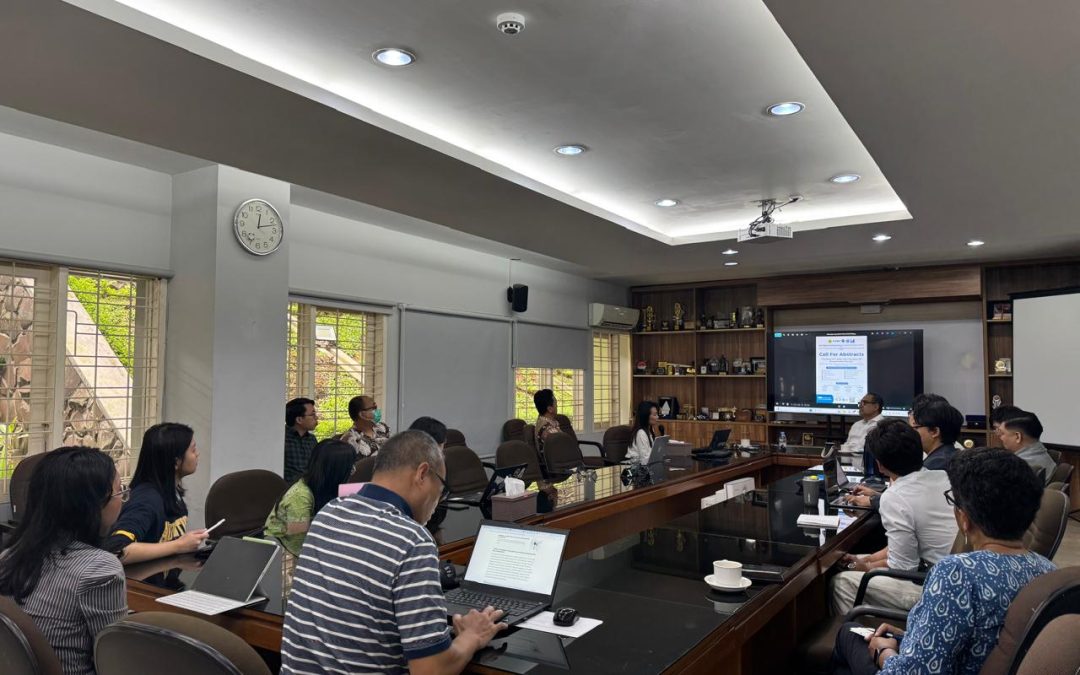


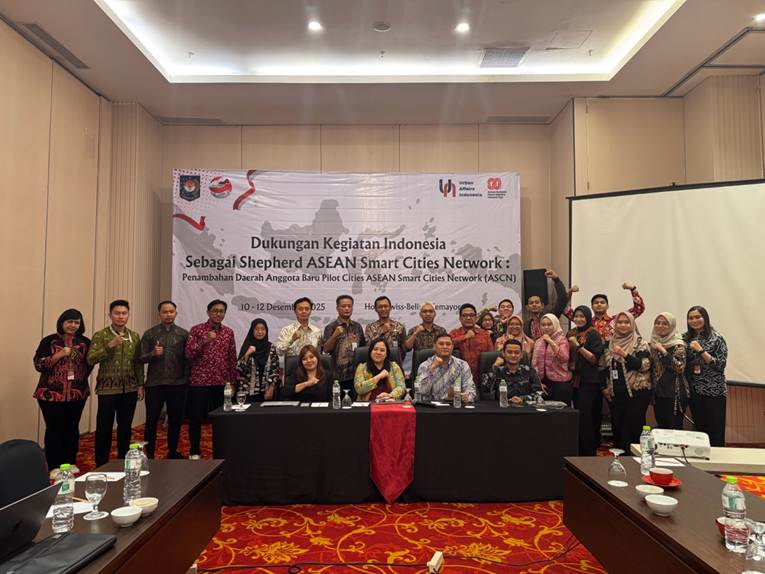
Jakarta, December 11, 2025. As a follow-up to the decision to add new members of the ASEAN Smart Cities Network Pilot Cities in the 8th ASCN Annual Meeting on September 8-12, 2025 in Kuala Lumpur, the Directorate of Regions, Urban Areas and State Borders, Directorate General of Regional Administration, Ministry of Home Affairs held a Meeting to Add New Member Regions of the ASEAN Smart Cities Network (ASCN) Pilot Cities through Innovation Assessment in Jakarta on December 11, 2025. This activity also serves as a form of support and commitment from Indonesia as Shepherd ASCN (2025-2027).
The meeting aimed to provide regional governments with a comprehensive understanding of their positions, roles, and strategic opportunities for participation in ASCN; to share the latest developments in the regional smart city agenda from the perspectives of Indonesia and the ASEAN Secretariat; to present best practices for smart city transformation; and to facilitate discussions between the central government, regional governments, and regional partners to strengthen ASCN membership readiness.
The event was opened by Dr. Drs. Amran, MT, Director of Regional, Urban, and National Border Affairs at the Ministry of Home Affairs, who also served as a keynote speaker at the ASEAN Smart Cities Network meeting.
Four speakers shared their views at the event, which was attended by representatives from smart cities in Indonesia who were promoted to join as new members of ASCN.
The first speaker was a representative of the Directorate of ASEAN Economic Cooperation, Ministry of Foreign Affairs, who delivered his presentation on TRANSFORMING ASEAN ASEAN VISION 2045: Resilient, Innovative, Dynamic, and People-Centred community by 2045. ASEAN’s innovative and sustainable urban Development is in line with the ASEAN Connectivity Strategic Plan (ACSP) as outlined in the ASEAN Community Vision 2045, which was approved at the 46th ASEAN Summit in May 2025. ASCAP emphasized the critical role of smart, sustainable urban Development in enhancing ASEAN connectivity, which is a priority area of cooperation in ASEAN’s view of the Indo-Pacific. Membership in ASCN provides several benefits. ASCAP is forward-looking and inclusive, with a smart city roadmap and several pilot projects that could serve as a showcase for ASEAN. ASEAN membership can also provide opportunities for access to innovative funding. Among them is the acceptance of the Investment toolkit and cooperation with ASEAN dialogue partner countries that have committed to supporting the Development of pilot cities that are members of ASCN.
The second speaker was a representative from the DKI Jakarta Provincial Government, an example of a city that has joined ASCN. His presentation was titled “Digital Transformation of Jakarta as a Smart City into a Global City 2025.” Jakarta is one of the ASCN members that has successfully developed the JAKI application, as a Super Application for Jakarta Citizens that integrates various public services and official information from the DKI Jakarta Provincial Government to meet the needs of Jakarta residents. Currently, more than 70 public services can be accessed through the JAKI Application. The application integrates at least 10 vital sectors, including health, education, order and security, environment, information and statistics, employment, food, sports, public libraries, and MSMEs. The JAKI 3.0 application supports a bilingual interface, Indonesian and English. The Jakarta Provincial Government continues to develop innovations related to the application. These include digital security to address residents’ concerns about data leaks, data minimization for public-facing data collection, and continuous Development to ensure the functionality and impact of features for users.
The third speaker was a representative of the Directorate of Standards Implementation and Conformity Assessment System, BSN, with a presentation entitled Implementation of SNI in Smart Cities. Specifically, SNI ISO 37122:2019, Sustainable Cities and Communities – Indicators for Smart Cities, was presented. This standard defines and establishes definitions and methodologies for a series of indicators for smart cities. The establishment of this standard is intended to accelerate improvements in services and quality of life, which are essential to the definition of a smart city. This document, in conjunction with ISO 37120, is intended to provide a complete set of various indicators to measure progress towards a smart city.
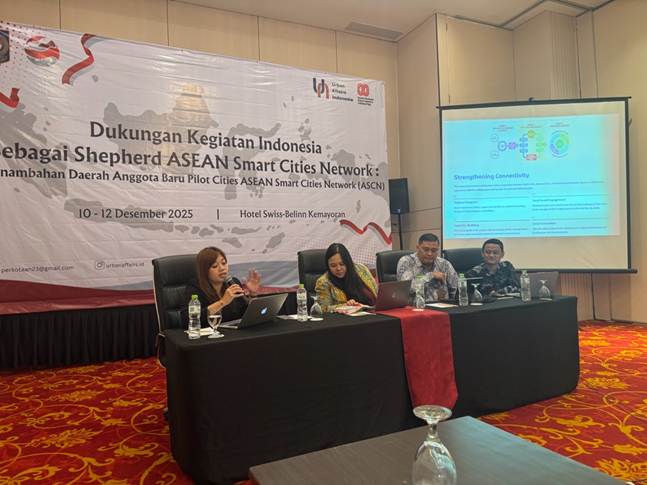
Annisa Paramita Wiharani, SIP, MA, a member of the Parahyangan Center for International Studies at Parahyangan Catholic University, the third speaker gave a presentation titled “Strengthening Regional Connectivity Through Smart Cities – Empowering Local Innovations for a More Integrated ASEAN.” Annisa emphasized that regional connectivity is not just about physical infrastructure, but also social, digital, and institutional connectivity. The Development of smart cities can bring ASEAN cities closer technologically and simultaneously strengthen the spirit of sharing, data systems, and policy collaboration. This is important because 90 million ASEAN residents live in towns while facing challenges such as pollution, congestion, and inequality.Therefore, cooperation between cities is as important as cooperation between countries.
On this occasion, four cities were promoted to new ASCN members: Semarang, Surabaya, Denpasar, and Palembang. Representatives from each town presented on innovative city Development and their commitment to fulfilling their obligations as ASCN members if elected. These cities were promoted for their achievements and performance in building smart cities compared to other smart cities in Indonesia.
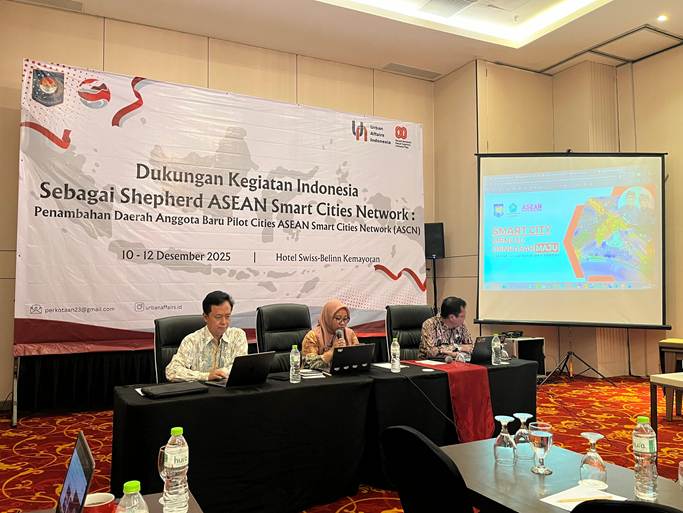
The Parahyangan Center for International Studies (PACIS) remains committed to supporting Indonesia, which has been selected as the ASCN Shepherd for the second term. PACIS explicitly endorses the selection of smart cities to join ASCN and provides several recommendations for Indonesia in fulfilling its role as Shepherd, particularly regarding how ASCN Chairs maintain their commitment to continued collaboration in developing smart cities in Southeast Asia.