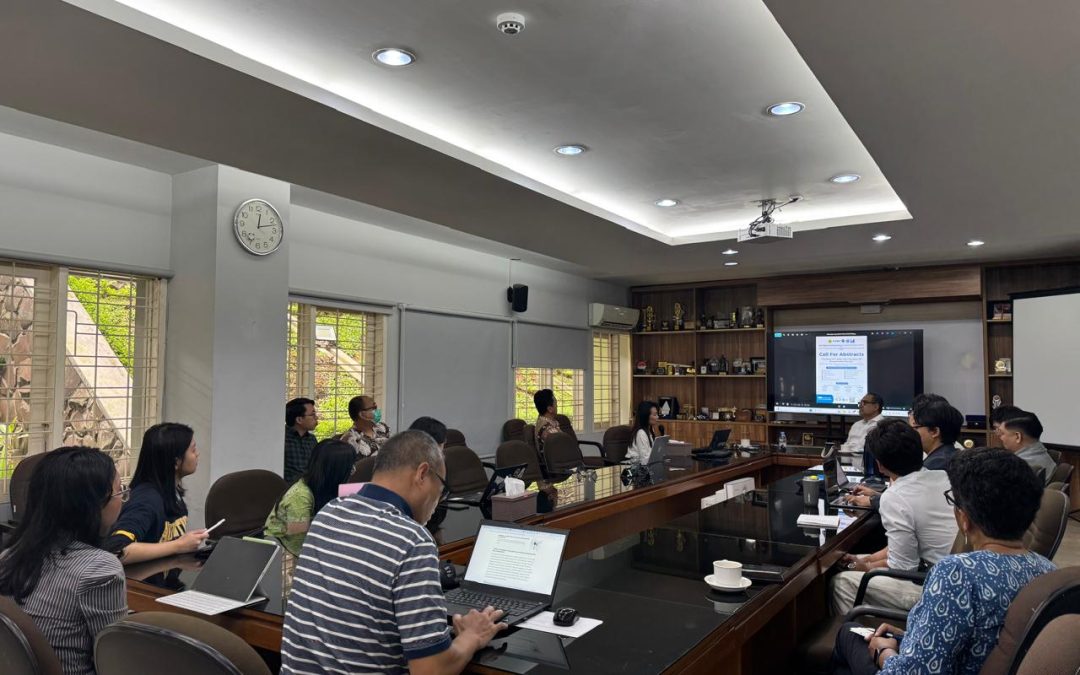


Bandung, January 12, 2026 — The Parahyangan Center for International Studies (PACIS) of Parahyangan Catholic University responded to an academic discussion with Marcelino, a correspondent for O Globo, Brazil’s largest daily newspaper, highlighting the growing global concern over the direction of international politics following the United States’ actions in Venezuela. This discussion stemmed from a reflection on the spirit of the 1955 Asian-African Conference in Bandung, particularly the principle of non-alignment, which is considered to be facing serious challenges in contemporary geopolitical dynamics.
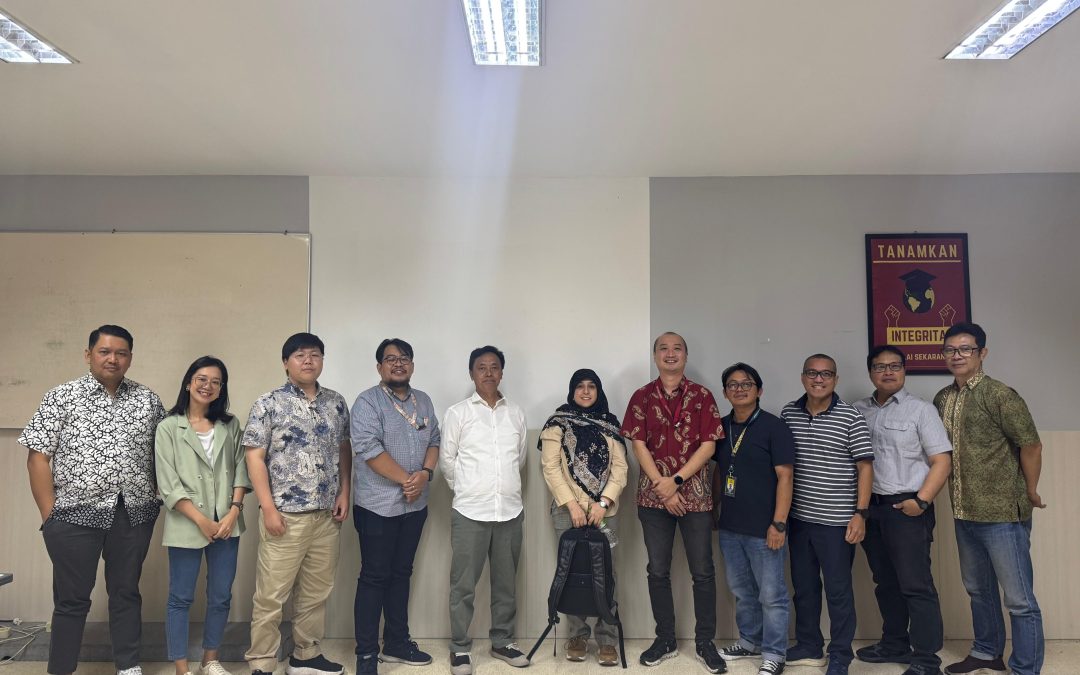
The PACIS researchers present were Yulius P Hermawan, Albertus Irawan, Kishino Bawono, Idil Syawfi, and Rizky Widian.
Researchers assess that US foreign policy under Donald Trump has shown increasingly unilateral tendencies, characterized by direct intervention, economic pressure, and a disregard for multilateral norms and institutions. These developments have given rise to the perception that the international order is moving toward the “law of the jungle,” where military and economic power become the primary determinants, while international norms and law are increasingly marginalized.
In this context, countries in various regions have responded differently. In Europe, there has been a growing trend toward strengthening security coordination to prevent similar incidents in the region. Meanwhile, Southeast Asian countries, including Indonesia, tend not to be forced to choose one side. Rather than forming a rigid alliance, the most realistic strategy is hedging, namely, maintaining security relations with the United States while maintaining economic and trade dependence on China.
This approach is driven by concrete domestic needs. China is a major trading partner and a crucial supplier to industrial supply chains, while the United States remains a strategic export market and a key player in the regional security balance. Tensions between these two major powers have the potential to directly impact the economic stability of Southeast Asian countries.
The discussion also highlighted the weakening of multilateralism as a key foundation for the sustainability of non-alignment. The United States’ withdrawal from various international organizations, its diminished commitment to global agreements, and its increasing unilateral policies are seen as serious threats to the rules-based international order. This is considered to narrow the space for developing countries to collectively articulate their interests.
Regarding the relevance of the Bandung Spirit, researchers assess that the global context has changed significantly compared to the Cold War era. The absence of strong solidarity among Global South countries, increasingly stark differences in national interests, and the absence of a strong leadership figure mean that a revival of the Bandung Spirit faces structural obstacles. Initiatives like BRICS are seen as incapable of fully representing the collective interests of the Global South due to high fragmentation and internal conflicts of interest.
The discussion also examined the United States’ position in the current international system. Speakers agreed that the United States remains the sole global superpower, although it is showing signs of relative decline. The world is currently considered to be in a “one-and-a-half unipolar system,” where the United States remains dominant, while other powers such as China and Russia have not yet fully matched its influence, particularly in the military dimension and in shaping the international order.
However, this dominance is also accompanied by internal vulnerabilities, ranging from domestic political polarization, economic pressures, and strategic fatigue resulting from prolonged global engagement. This situation raises concerns that an increasingly aggressive foreign policy reflects anxiety about the potential decline of the United States’ global standing.
Concluding the discussion, the researchers emphasized that the United States’ actions in Venezuela have the potential to create long-term effects, including an escalating arms race and encouraging other countries to strengthen their defense capacities. In Asia, these concerns are exacerbated by geographic proximity to China and unresolved security disputes, particularly in the South China Sea. While the Bandung Spirit is difficult to replicate in its original form, its core values remain an important reference for countries in the Global South navigating an increasingly complex and uncertain world.
Author: Nazwa
Documentation: